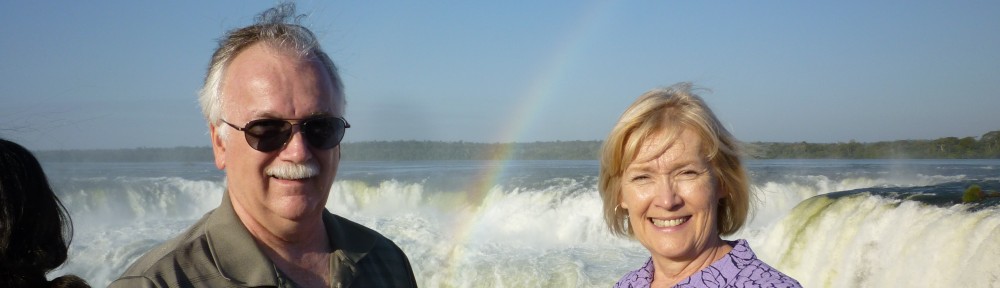
In November 2025 we travelled to Denpasar on the Indonesian island of Bali for work, coordinating a Conference attended by power plant Owners and Operators from 23 countries. While we were in the neighborhood we decided to visit New Zealand on the way home, which had been on our “interesting” list for some time. When we got to New Zealand, the NewZealanders (called Kiwis) explained that we had it severely backwards. One was supposed to do work in New Zealand and party in Bali.
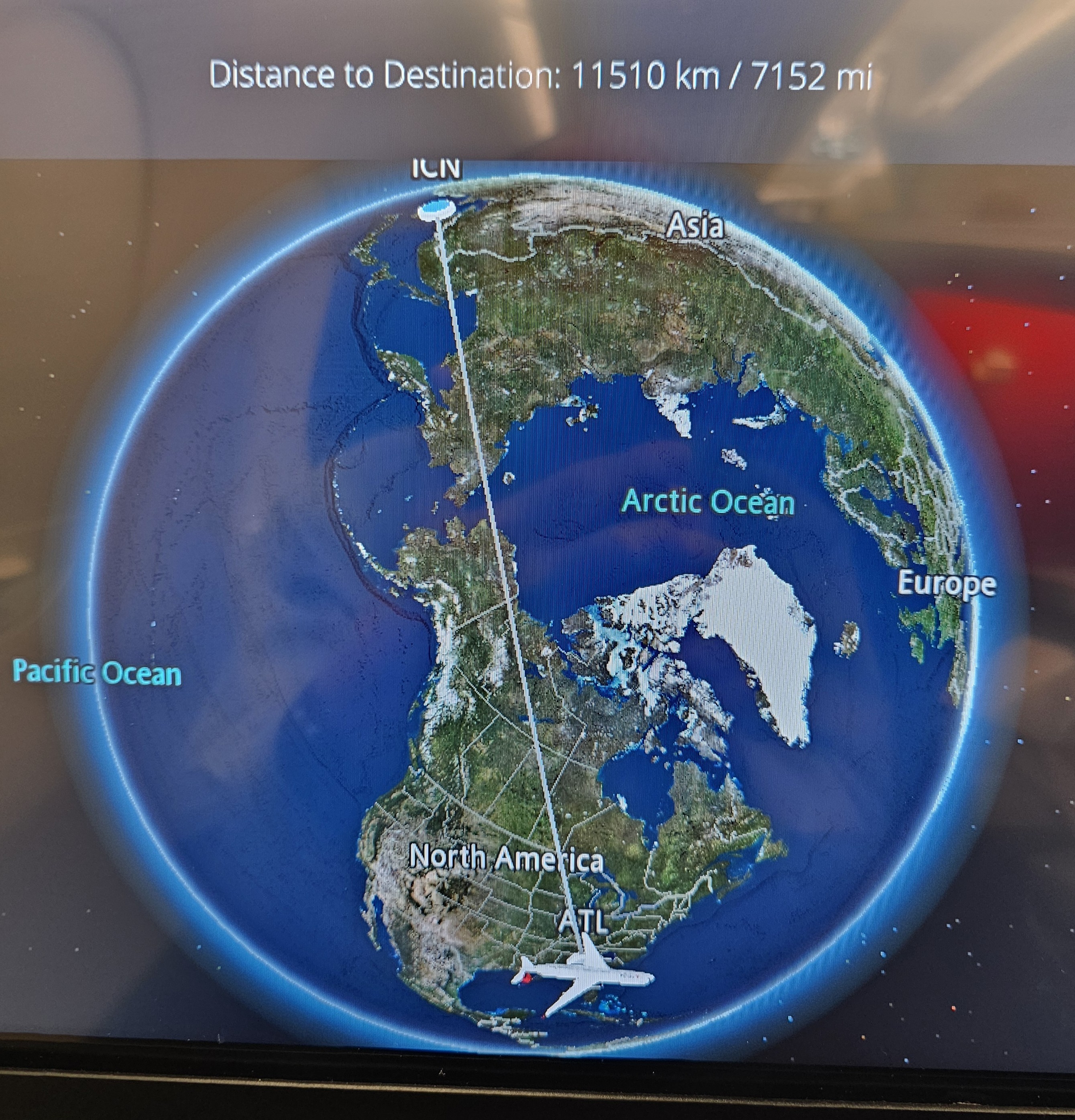
To get to Indonesia we took a 16 hour flight from Atlanta to Seoul, South Korea going 7152 miles over Alaska, the Arctic Ocean and almost over the North Pole. That got us close to Indonesia. It only took another 8 hour flight south to get there. It was a bit over 11,000 miles door to door.
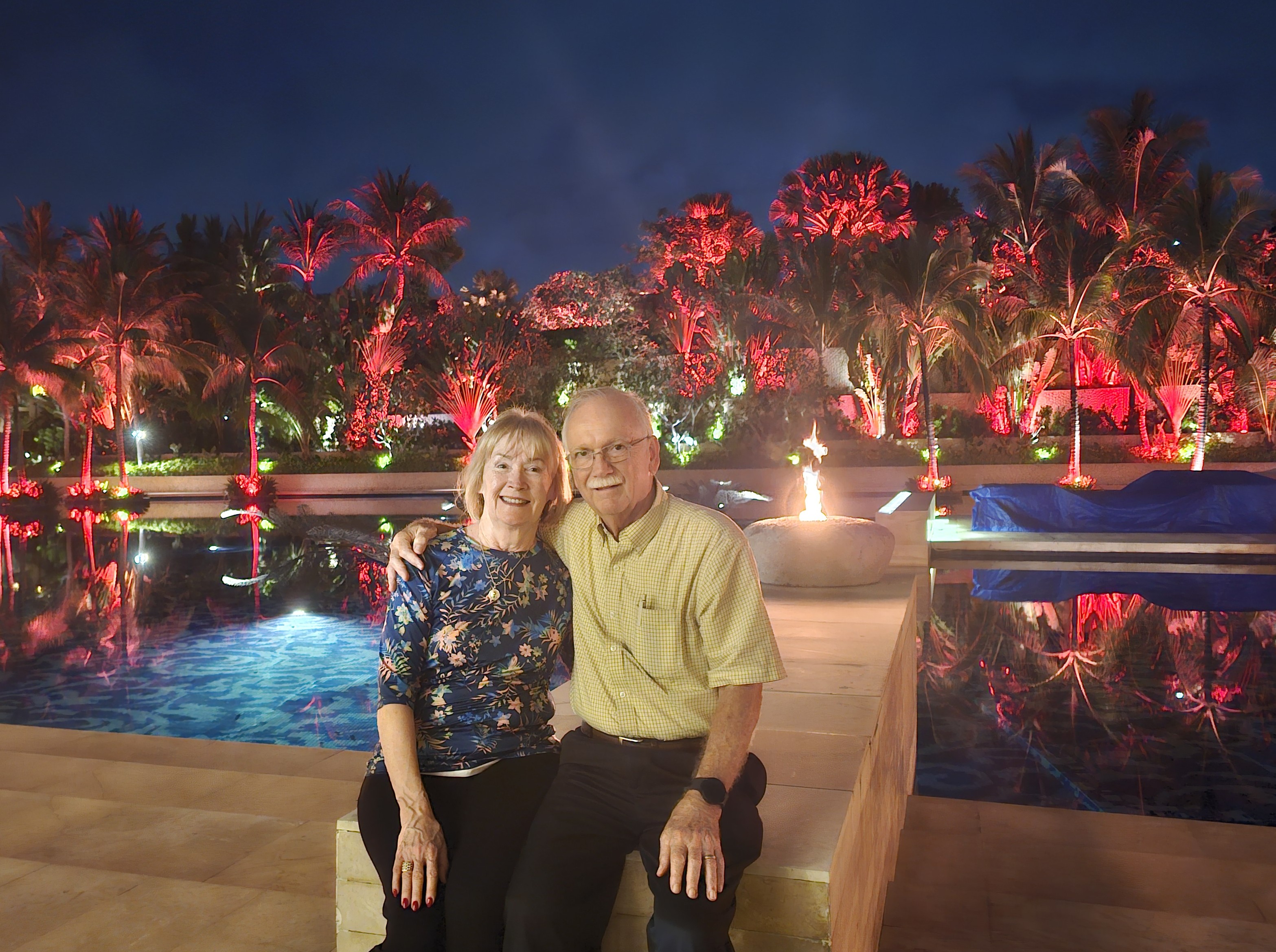
When we got there, two days later and after 36 hours of travel, we celebrated at our hotel. Then we got down to work, with a strategy meeting with the Users’ Group Chairman at the beach bar with the Indian Ocean in the background, followed by several days of meetings.

The Conference was not all work, however. The world-famous Dancing Queens performed once again

After the Conference we flew to New Zealand for the second phase of our Indonesia/New Zealand expedition — the fun phase. We had decided to visit New Zealand since we were already “in the neighborhood” in Indonesia. Turns out the neighborhood was an 8 hour plane ride and 5 time zones away across the middle of Australia!

We landed in Auckland, New Zealand on the North Island. Auckland is known as the “City of Sails” and is the current home of the Americas Cup for sailboat racing. New Zealand has won the last three “Americas” Cup competitions (2017, 2021 and 2024). We went out onto the sailing course in the Auckland Harbor in a retired Americas Cup boat.

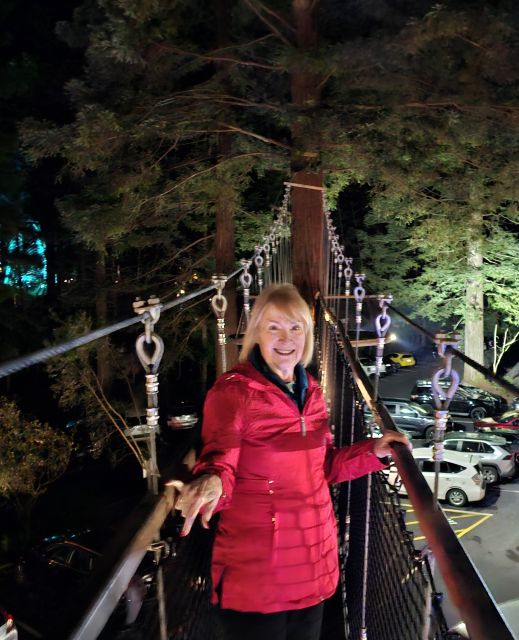
John got to drive it as well. It is 80 feet long with a 120 foot mast which carries over 600 square meters of sail. The wind was light, but it got up to 7 knots of speed with all that sail area. Later in the day we hiked to a series of fresh water springs that were sacred to the indigenous Maori people and moved to Rotorua for the next two nights. Once in Rotorua, we went on a lighted night walk after dinner, high in the trees in a grove of 75 meter high Sequoia (redwood) trees on a series of 28 suspended bridges and 27 platforms that got up to 20 meters off the ground. Fortunately, it was too dark to see clearly how far away the ground was.
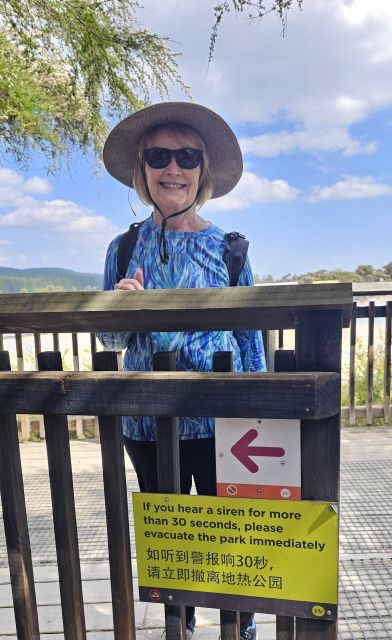
The next day was focused on Maori culture, with a visit to a traditional marae (meeting place) in the Maori village of Marupara, ancient rock carvings carbon-dated to 1050 AD and presentations by Maori guides on their culture, ancestors and current social status. Later in the day we visited the Waiotapu Geothermal Park to hike around a series of geysers, boiling mud pots and other volcanic features.


After three exciting days on the North Island of New Zealand we flew from Rotorua to Christchurch on the South Island. We were driven from there to the “New Zealand Alps” area, stopping on the way at Lake Tekapo to photograph the most photographed church in New Zealand.

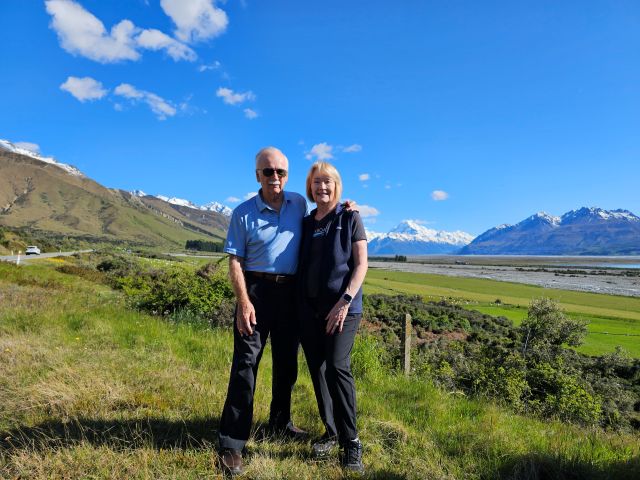
We stayed the next two nights near Aoraki/Mt. Cook which is the highest mountain in New Zealand at over 3700 meters (12,200 feet). The area has 19 peaks over 3000 meters. Here is the view from our hotel room, with Aoraki/Mt. Cook in the distance in the center.

The next day we took a glacier boat cruise on Lake Tasman to the foot of the Tasman Glacier, stopping on the way to learn about and examine the icebergs which had “calved” from the glacier in the previous days and were floating about in the lake. Their crystal-clear ice was estimated to be 500-600 years old.


That afternoon we logged over 20,000 steps hiking in the foothills of the Aoraki/Mt. Cook National Park with Leon and Julian (imagine that)! Julian was our tour director and Leon was the park’s guide for our hike.

We topped off the day with a Dark Skies Star Show in the hotel’s planetarium. The day had been generally overcast to that point, but when we exited the planetarium at 9PM it had cleared up and we were treated with a fleeting few minutes of beautiful “alpine glow” as the sun set over the mountains.

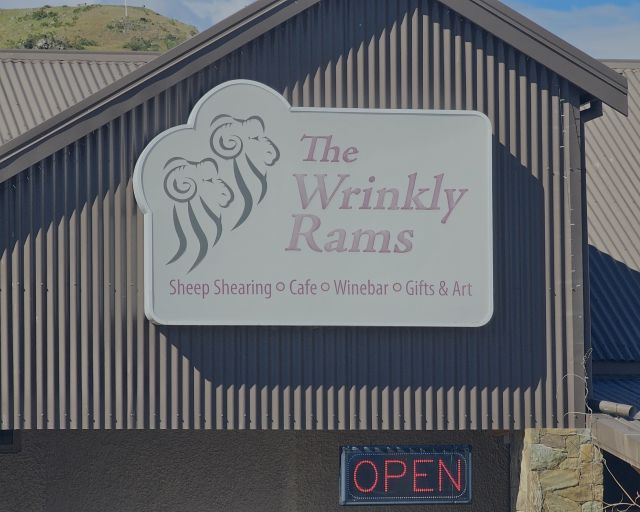
After leaving the mountains, we headed to Queenstown – the adventure capital of New Zealand. Lots of outdoors-types come there to ski, hike, paraglide, rock climb, etc. On the way, we stopped for coffee at the Wrinkly Rams outpost. Note the additional service provided is “sheep shearing” in addition to coffee. The low population density in the South Island results in some interesting combinations.
We stopped for lunch in Arrowtown, an old gold mining town dating from the 1860’s that reminded us of Silverthorne in Colorado, which has a similar history and is about the same vintage. It seems that for some reason the gold rushes happened all at about the same time in the US, Australia and New Zealand. And that was before the power of social media caused excessive focus on a topic!
We had a “small world” moment in Arrowtown. We stopped for lunch at the Fork & Tap for lunch, where the bartender asked us where we were from. When we said Florida he asked where in Florida. When we said New Smyrna Beach he was incredulous. He was born in Bert Fish Memorial Hospital in NSB and grew up in Flagler Beach!
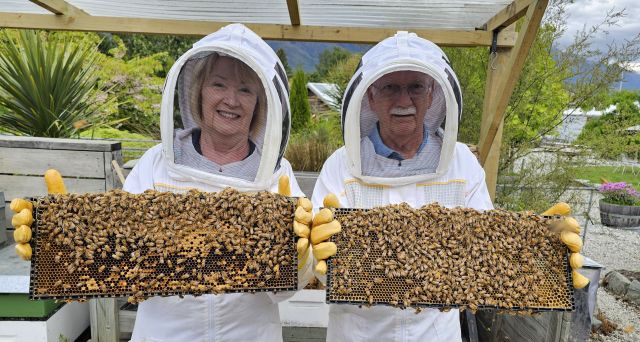
Once in the Queenstown we stopped at the Buzzstop Honey Center, run by a local beekeeper. Seems that the world’s best and most expensive honey comes from New Zealand because of the Manuka flowers (at least that’s what he claimed). There we “met the bees” and learned all about bees and harvested our own honey. That whole story was amazing.
Arriving in Queenstown, we checked into our hotel room, which had an amazing view of Lake Wakatipu and the South Island mountains.

The next morning we took the “steepest gondola in the Southern Hemisphere” to the top of Ben Lomond. Seems this town was settled by Scottish people in the mid-1800’s, so they have “Bens” instead of mountains. The view of Queenstown was spectacular, even though it was raining a bit. Interestingly, Queenstown is the largest city on the south end of the South Island, with 29,000 inhabitants and a metropolitan area of about 50,000 population. About the same size of Winter Springs or New Smyrna Beach, but it seemed much larger.

After going up in the gondola, we hiked down, thinking gravity would be a good help. Turns out it was very steep and rocky, but we survived. We told our trip leader that we thought we were at the top end of the age range that he should take on that trail in the future. He seemed to agree, but he did mention that the last time he was on that trail he had run up it with his child on his back!
On our final “structured” day in Queenstown we were driven by our tour director to Glenorchy at the foot of Lake Wakatipu. This is another small town focused on “adrenaline-filled adventure tourism”. There we took a jet boat about 45 km up the Dart River Valley into Mount Aspiring National Park. That river is only a few inches deep in spots as it meanders through the glacier-formed gravel going upriver. At the top end of the river are sites where many movies were filmed to capture “quintessential, untouched New Zealand scenery” in Lord of the Rings, Chronicles of Narnia, The Hobbit Trilogy, Mission Impossible and other films. Our jet boat driver was a bit of a “hot-dog” and treated us to five gut-wrenching 360 degree spins during the voyage.

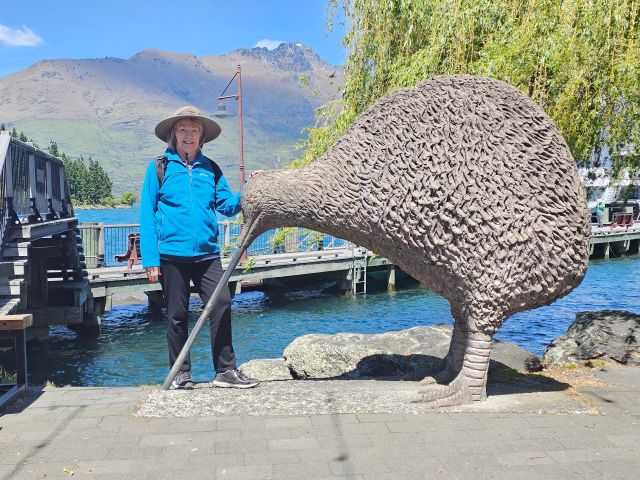
On our final day in Queenstown we relaxed a bit, hiked around the lakeshore and responded to E-Mails. We had lunch at “Ferg’s”, home of the world-famous Fergburger, which CNN has proclaimed as the “best burger joint in New Zealand and perhaps on the Planet”. As apparently is always the case Ferg’s was packed with long lines of foreign tourists, but Ferg’s Bar next door was almost empty and had the same menu, so we got our Fergburger. On the way back to our hotel Paula posed with a Kiwi, the flightless bird that is the best-known national symbol of New Zealand.

We got home safely and eventually recovered from jet-lag. It was another 36 hour journey, this time over the very empty southern Pacific Ocean.

New Zealand was a great place to visit. It may be too far away for us to visit again, but we highly recommend it if you are “in the neighborhood”.




 John and Paula's Blog